


A single police complaint can turn an ordinary life upside down overnight. One argument that escalates into a knife attack, one gunshot that misses its mark, one act of road rage that goes too far, and suddenly a person is staring at a charge that can carry life imprisonment even though nobody died.
That is the reality of Section 109 of the Bharatiya Nyaya Sanhita, 2023 (BNS), India’s provision for attempt to murder. It is one of the most serious non-bailable offences in the country’s criminal code, and it is also one of the most misunderstood. Many people assume that if the victim survives with a minor scratch, the charge cannot be serious. Courts disagree, and the law is built specifically to reject that assumption.
Since the Bharatiya Nyaya Sanhita replaced the Indian Penal Code (IPC) on 1 July 2024, thousands of FIRs have been registered under this single section across the country, from college campuses to police stations to remote villages. Whether you are a law student trying to understand the provision, a family member of someone who has just been arrested, or simply someone trying to make sense of a news report, this guide breaks down Section 109 BNS in plain language while staying accurate to the bare act, recent case law, and 2026 court decisions.
By the end of this guide, you will know exactly what the law says, how punishment is calculated, whether bail is possible, and what the trial process actually looks like from FIR to judgment.
What Is Section 109 BNS? — Definition and Full Text

Section 109 of the Bharatiya Nyaya Sanhita, 2023 defines and punishes the offence of attempt to murder. It applies when a person does an act with the intention or knowledge that, had the act actually caused death, they would have been guilty of murder, but the victim survives.
The bare text of the provision reads as follows.
Section 109(1): “Whoever does any act with such intention or knowledge, and under such circumstances that, if he by that act caused death, he would be guilty of murder, shall be punished with imprisonment of either description for a term which may extend to ten years, and shall also be liable to fine; and if hurt is caused to any person by such act, the offender shall be liable either to imprisonment for life, or to such punishment as is hereinbefore mentioned.”
Section 109(2): When a person already under a sentence of life imprisonment commits an act punishable under sub-section (1) and hurt is caused, he may be punished with death or with imprisonment for life, which shall mean imprisonment for the remainder of that person’s natural life.
In simple terms, the law asks a hypothetical question. Take the exact act the accused committed. Now imagine that act had actually resulted in death. Would the accused, on those facts, have been guilty of murder? If the answer is yes, Section 109 BNS applies, regardless of how the victim’s actual injuries turned out.
A classic illustration used by courts and legal commentators involves a person who fires a loaded gun at another with clear intent to kill. If the bullet only grazes the victim and they survive, the shooter is still guilty under Section 109 BNS. The survival of the victim does not erase the intent or the act that was already complete.
Section 109 BNS vs. Section 307 IPC — Key Differences
If you grew up hearing about “307” in news reports or old FIRs, you already know this offence, just under a different number. Section 109 BNS is the direct successor to Section 307 of the Indian Penal Code, 1860, and the substance of the offence has barely changed.
Here is how the two provisions compare.
| Aspect | Section 307 IPC (Old) | Section 109 BNS (New) |
| Definition | Same core definition of attempt to murder | Same core definition retained |
| Base punishment | Up to 10 years + fine | Up to 10 years + fine |
| Punishment if hurt caused | Life imprisonment or up to 10 years | Life imprisonment or up to 10 years |
| Repeat offender clause | Life imprisonment (interpreted case by case) | Life imprisonment expressly clarified as “remainder of natural life” |
| Applicable from | Offences committed before 1 July 2024 | Offences committed on or after 1 July 2024 |
| Bail status | Non-bailable | Non-bailable |
| Trial court | Court of Session | Court of Session |
The one meaningful legal update in the BNS version sits in sub-section (2). Under the old IPC framework, “imprisonment for life” for a repeat offender was interpreted through years of judicial precedent. The BNS now explicitly states that in such cases, life imprisonment means imprisonment for the remainder of the convict’s natural life, closing off any ambiguity about early release or remission for the most dangerous repeat offenders.
Everything else, including how courts test intention, how they treat medical evidence, and how they decide bail, continues almost unchanged from the IPC era. Judgments delivered under Section 307 IPC before July 2024 remain fully relevant and are still cited by lawyers and courts today when arguing Section 109 BNS cases.
Essential Legal Character of Section 109 BNS
Before getting into the ingredients and punishment slabs, it helps to understand the basic legal nature of this offence, since it determines almost everything else that follows in a case.
- Cognizable offence: Police can register an FIR and arrest the accused without needing a warrant or prior court permission.
- Non-bailable offence: Bail is not a matter of right. It is granted or refused entirely at the discretion of the court based on the facts of the case.
- Non-compoundable offence: The complainant and accused cannot privately settle the matter and have the case withdrawn, even if both parties wish to do so.
- Triable exclusively by the Court of Session: A magistrate’s court cannot conduct the trial. The case must go to a Sessions Judge, which typically makes the process longer and more procedurally serious.
- Grave and continuing offence: Because it strikes at the right to life under Article 21 of the Constitution, courts treat this offence with a level of seriousness that goes beyond most other bodily-harm offences.
This combination, cognizable, non-bailable, and triable only by a Sessions Court, is precisely why an FIR under Section 109 BNS moves so quickly from complaint to arrest to a lengthy legal battle.
Three Essential Ingredients of Section 109 BNS
For a conviction to stand, the prosecution must establish three connected elements beyond reasonable doubt. Missing even one of these can be the difference between a conviction for attempt to murder and a much lesser charge such as causing hurt.
1. Intention or Knowledge (Mens Rea)
This is the heart of the offence. The prosecution must show that the accused acted either:
- With the intention of causing death, or
- With the intention of causing bodily injury that the accused knew was likely to cause death, or
- With the knowledge that the act was so imminently dangerous that it must, in all probability, cause death.
Courts look at circumstantial factors to infer this intention, since a person’s mental state is rarely proven by direct evidence. Relevant factors typically include the nature of the weapon used, the part of the body targeted, the number of blows or shots, any prior enmity between the parties, and statements made by the accused before or during the act.
2. An Overt Act (Actus Reus)
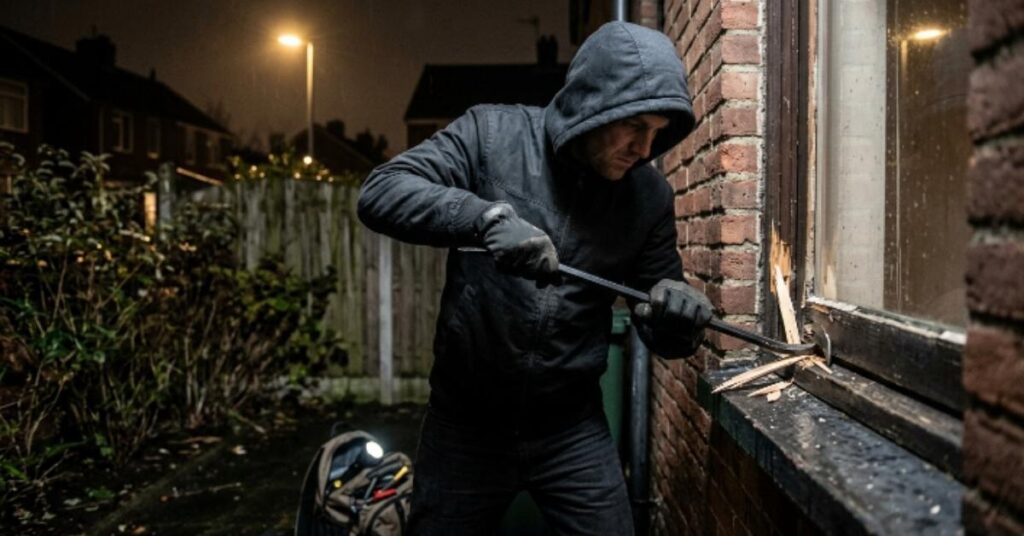
Intention alone is never enough. The accused must have gone beyond mere preparation and taken a concrete step directly connected to the commission of murder. Buying a weapon, for example, is preparation. Firing that weapon at the intended victim, or placing poisoned food where the victim will consume it, is an overt act that satisfies this ingredient.
The line between preparation and attempt has been tested repeatedly in Indian courts, and the general principle is that the act must bring the accused into direct, proximate contact with the intended harm, not merely set the stage for it.
3. Death Did Not Occur
By definition, this section applies only where the victim survives. If the victim dies as a result of the act, the charge shifts entirely to murder under Section 103 BNS (formerly Section 302 IPC), not attempt to murder. The survival of the victim, whether due to medical intervention, luck, or the victim’s own actions, is what keeps the charge within Section 109 rather than escalating it.
Importantly, courts have consistently held that the degree of injury actually suffered is not the deciding factor. Even superficial or non-fatal wounds can support a conviction if the intent and act are proven, because the offence is complete the moment the act is done with the requisite intention, independent of the outcome.
Section 109 BNS Punishment — Complete Breakdown
Punishment under this section is not a single fixed term. It is calibrated in three distinct scenarios depending on the outcome of the act and the offender’s criminal history.
Scenario 1: Act Committed, No Injury to Victim
If the accused commits the act with the required intention or knowledge but the victim suffers no actual hurt, the punishment is:
- Imprisonment of either description (rigorous or simple) for a term that may extend to 10 years, and
- A fine.
For instance, if a person shoots at another with clear intent to kill and completely misses, this scenario applies. The lack of injury does not mean a lesser offence; it simply places the punishment at the lower end of the available range, at the court’s discretion.
Scenario 2: Act Committed, Victim Is Injured
If the same act causes hurt to the victim, however minor, the punishment escalates significantly:
- Imprisonment for life, or
- Imprisonment for a term extending up to 10 years, along with a fine, depending on the severity of the facts and the court’s assessment.
This is the scenario most commonly seen in trial courts. Courts weigh the nature of the weapon, the location and depth of the injury, and the overall brutality of the act when deciding where within this range the sentence should fall.
Scenario 3: Offender Already Serving Life Imprisonment, Victim Is Injured
This is the most severe category under Section 109(2). If a person who is already serving a life sentence commits attempt to murder and causes hurt in the process, the punishment can be:
- Death, or
- Imprisonment for life, which explicitly means imprisonment for the remainder of that person’s natural life, with no scope for standard remission.
This provision is aimed squarely at habitual and dangerous repeat offenders, and it represents the clearest legislative departure from the old IPC framework.
It is worth remembering that courts do not automatically impose the harshest available sentence in any of these scenarios. Sentencing is calibrated based on the degree of premeditation, the weapon used, the vulnerability of the victim, the offender’s age and criminal record, and the overall facts placed before the Sessions Court.
Is Section 109 BNS Bailable or Not? — The Complete Answer
No. Section 109 BNS is a non-bailable offence. This is one of the most frequently searched questions around this provision, and the answer has a direct, practical consequence: an accused person does not have an automatic legal right to be released on bail simply by applying for it.
Being non-bailable means:
- Bail cannot be granted by a police officer at the police station.
- Bail must be argued and decided by a Sessions Court judge, or in appropriate cases, the High Court or Supreme Court.
- The court exercises judicial discretion, weighing the evidence, the severity of allegations, and the risk the accused poses if released.
However, non-bailable does not mean bail is impossible. As the 2026 case studies later in this guide demonstrate, Indian courts have granted regular bail, interim bail, and even anticipatory bail in genuine Section 109 BNS cases where the facts justified it. The seriousness of the label attached to the offence is not, by itself, an automatic bar to liberty.
How to Get Bail in Section 109 BNS Cases — Factors Courts Consider
Because there is no automatic entitlement to bail, the outcome depends heavily on how the facts are presented and argued before the court. Judges typically weigh a combination of factors that favour release against those that justify continued custody.
Factors Favouring Bail
- Weak, contradictory, or solely interested-party evidence of intent to kill.
- Simple or non-fatal injuries that were not on a vital part of the body.
- A delayed or suspicious FIR, suggesting possible exaggeration or afterthought.
- No prior criminal record or history of violence.
- A weapon that was not inherently lethal, or no weapon recovered at all.
- Full cooperation with the investigation, completed recovery of evidence, and no risk of the accused fleeing or tampering with witnesses.
- Special personal circumstances, such as an ongoing academic examination, a medical emergency, or a compelling humanitarian need.
Factors Against Bail
- Clear, corroborated evidence of premeditation or planning.
- Use of a deadly weapon such as a firearm or a knife aimed at a vital body part.
- Serious, life-threatening injuries requiring extended hospitalisation.
- A criminal history involving prior violent offences.
- A genuine risk that the accused may influence witnesses, tamper with evidence, or abscond.
- Allegations involving multiple accused acting in concert, or aggravating circumstances such as attacks on vulnerable victims or in a public place.
Types of Bail Applications in Section 109 BNS
There are three main routes available to an accused person or someone anticipating arrest under this section.
- Regular Bail (Section 483 BNSS): Filed after arrest, seeking release from judicial custody during investigation or trial.
- Anticipatory Bail (Section 482 BNSS): Filed before arrest, when a person has a genuine apprehension of being arrested and wants pre-arrest protection.
- Interim Bail: A short-term, conditional bail granted for a specific and limited purpose, such as attending an examination, a medical procedure, or a family emergency, while the main bail application is pending or without deciding on the merits of the case at all.
Each route requires a separate application supported by specific facts, and the standard of scrutiny applied by the court is high given the gravity of the underlying charge.
2026 Featured Case Study 1: Karnataka Sessions Court — Hampi Attack Case
In one of the most closely watched criminal trials of 2026, a Sessions Court in Koppal, Karnataka delivered its verdict in a brutal attack that had taken place near Sanapur Lake in Hampi in March 2025, involving foreign and Indian tourists. The case drew international attention because of the vulnerability of the victims and the extreme brutality of the crime, and one victim tragically lost his life the day after the attack.
The court convicted three accused and classified the case as falling within the “rarest of rare” category, resulting in the imposition of the harshest available punishment under the law. This verdict illustrates a clear judicial pattern: where an act under Section 109 BNS (charged alongside other grave offences) is premeditated, brutal, and targets defenceless victims in a public or semi-public place, courts are willing to impose life imprisonment for the remainder of the convict’s natural life, with no leniency extended.
Key takeaway: Aggravating factors such as premeditation, targeting vulnerable victims, and extreme brutality push sentencing toward the maximum end of the scale under Section 109 BNS.
2026 Featured Case Study 2: Delhi Court — Class XII Student Granted Interim Bail
A very different picture emerged in March 2026, when a Delhi court granted interim bail to an 18-year-old student who had been arrested under Section 109(1) BNS after allegedly being involved in a stabbing incident outside a Delhi school, tied to an earlier dispute involving firecrackers on campus.
The Additional Sessions Judge granted a short window of interim bail solely so the accused could appear for the last remaining paper of his Class XII board examination, having already sat for five of the six papers. The court reasoned that losing an entire academic year at that stage of life would cause irreparable harm to the student’s future that could never be undone, even if he were later found not guilty, and that the constitutional right to education under Article 21-A had to be balanced against the seriousness of the charge.
Importantly, the court was careful to clarify that this limited relief was not an endorsement of the alleged offence, and did not amount to condoning what had happened. It also flagged that the school administration had failed to intervene after an earlier warning sign, an observation that added a layer of institutional accountability to the case.
Key takeaway: Even within a strict non-bailable framework, courts can and do carve out narrow, time-bound relief when there is a compelling, verifiable humanitarian or constitutional interest at stake, without weakening the underlying charge.
2026 Featured Case Study 3: Punjab & Haryana High Court — ASI Anticipatory Bail Case
The Punjab and Haryana High Court dealt with an unusual and legally significant scenario involving a serving police officer. An Assistant Sub-Inspector (ASI) working as a Personal Security Officer to a High Court judge was accused of pointing his service pistol at a court officer and attempting to fire during a dispute, leading to an FIR under Section 109(1) BNS along with the Arms Act.
The High Court granted anticipatory bail after examining the totality of circumstances. Several factors weighed decisively in the officer’s favour: all rounds in the service weapon were recovered fully intact, indicating no actual firing attempt had materialised; the injuries involved were simple in nature; the accused had tendered an apology; and he had fully cooperated with the recovery process during investigation. The court held that serious allegations under Section 109(1) BNS do not create an automatic bar to anticipatory bail, and that each application demands a nuanced, risk-based assessment rather than a mechanical refusal.
Key takeaway: The absence of an actual lethal outcome, combined with cooperation and mitigating conduct, can persuade a High Court to grant pre-arrest protection even in a Section 109 BNS matter, provided due-process safeguards are respected.
Section 109 BNS — Landmark Supreme Court Principles (Applied in 2026)
Because Section 109 BNS carries forward the substance of the old Section 307 IPC almost unchanged, decades of Supreme Court precedent continue to guide how courts interpret and apply it today. Some of the enduring principles that Indian courts rely on include:
- Intent does not require immediate death. In Om Prakash v. State of Punjab, the Supreme Court held that an act intended to cause death remains an attempt to murder even if death, had it occurred, would have followed only after a period of time, such as through prolonged starvation. The result need not be instantaneous for the offence to be made out.
- Nature of injury is not the sole test. The Supreme Court has repeatedly clarified that a charge under this provision does not depend on how deep or dangerous the actual wound turned out to be. What matters is the intention and the act, not the surgical outcome of that act.
- Weak or absent common intention defeats the charge. Where multiple accused act without a shared intention to kill, and injuries are simple in nature, courts have declined to sustain a conviction for attempt to murder, even if some form of assault clearly took place.
- Framing of charge is not a mini-trial. Courts have held that at the stage of framing charges, a judge is not expected to conduct a detailed assessment of the medical evidence; a prima facie case is sufficient to proceed to trial.
These principles remain fully applicable to Section 109 BNS matters today, and lawyers routinely cite pre-2024 Section 307 IPC judgments as persuasive authority in current BNS trials and bail hearings.
The Trial Process Under Section 109 BNS — Step by Step
Understanding what actually happens after an FIR is registered can help demystify a process that often feels opaque and frightening to those going through it for the first time.
Step 1 — FIR Registration
The process begins the moment a complaint disclosing a cognizable offence is made to the police. Since Section 109 BNS is cognizable, the police are obligated to register an FIR and can begin investigation, and arrest, without needing a magistrate’s prior approval.
Step 2 — Police Investigation
The investigating officer collects evidence, which may include the weapon used, medical reports of the victim, forensic evidence, CCTV footage, and witness statements. Under the newer procedural framework, mandatory forensic examination applies to offences carrying punishment of seven years or more, which includes this offence.
Step 3 — Charge Sheet (Police Report)
Once investigation is complete, the police file a charge sheet before the magistrate. Since the case is triable exclusively by the Court of Session, the magistrate then commits the case to the Sessions Court.
Step 4 — Charges Framed
The Sessions Court examines the charge sheet and evidence on record. If it finds a prima facie case, it formally frames charges under Section 109 BNS against the accused, who is then asked to plead guilty or claim trial.
Step 5 — Evidence and Trial
The prosecution presents its witnesses, including the victim, eyewitnesses, medical experts, and the investigating officer, who are cross-examined by the defence. The defence may also present its own evidence and witnesses at this stage.
Step 6 — Arguments
Once all evidence is recorded, both the prosecution and defence present final arguments before the Sessions Judge, summarising the evidence and applicable law in support of their respective positions.
Step 7 — Judgment
The Sessions Court delivers its judgment, either convicting or acquitting the accused. If convicted, a separate hearing on sentencing follows, where the court decides the appropriate punishment within the range prescribed under Section 109 BNS, and either party may appeal the outcome to the High Court.
Government Update: New Criminal Laws Effective 1 July 2024
Section 109 BNS exists within a much larger legal transformation. On 1 July 2024, India replaced three colonial-era statutes that had governed criminal justice for over 150 years:
- The Bharatiya Nyaya Sanhita (BNS), 2023 replaced the Indian Penal Code, 1860, and now defines offences and punishments, including Section 109.
- The Bharatiya Nagarik Suraksha Sanhita (BNSS), 2023 replaced the Code of Criminal Procedure, 1973, and governs how investigation, arrest, and bail applications (such as Sections 482 and 483 discussed above) are handled procedurally.
- The Bharatiya Sakshya Adhiniyam (BSA), 2023 replaced the Indian Evidence Act, 1872, and governs how evidence, including electronic evidence such as CCTV footage and mobile data, is admitted and proved at trial.
An important transition rule applies here. If an offence was committed before 1 July 2024, the case continues to be governed by the old IPC, CrPC, and Evidence Act, regardless of when the trial actually takes place. Only offences committed on or after 1 July 2024 fall under the new BNS, BNSS, and BSA framework. This means Indian courts will continue hearing cases under both the old and new laws in parallel for several more years.
Section 109 BNS vs. Related Offences — How Courts Distinguish
Section 109 BNS sits alongside several related provisions, and courts pay close attention to precisely which one applies to a given set of facts.
- Section 109 BNS vs. Section 103 BNS (Murder): The dividing line is simple, death. If the victim dies, the charge is murder. If the victim survives, and the other ingredients are met, the charge remains attempt to murder.
- Section 109 BNS vs. Voluntarily Causing Hurt (Sections 115 to 118 BNS): These lesser offences apply where there is no intention or knowledge amounting to an intention to kill. If the prosecution cannot prove that the accused intended death or knew the act was likely to cause death, the charge is typically reduced to voluntarily causing hurt or grievous hurt instead.
- Section 109 BNS vs. Attempt to Commit Culpable Homicide (Section 110 BNS): This distinction turns on the degree of intent. Section 109 requires intention or knowledge that would amount to murder if death occurred. Section 110 applies to a lesser degree of intent, one that would only amount to culpable homicide not amounting to murder, had death actually resulted.
Getting this classification right at the earliest stage, ideally at the time charges are framed, can significantly affect both the bail outcome and the eventual sentence
Common Defenses in Section 109 BNS Cases
Defence strategy in these cases typically focuses on breaking one of the three essential ingredients discussed earlier. Common approaches include:
- Absence of intent to kill: Arguing that the act, even if violent, was not accompanied by the specific intention or knowledge required for attempt to murder, and may at most support a lesser charge.
- Right of private defence: Arguing that the accused acted to protect themselves or another person from an imminent threat, and did not exceed the reasonable force required to do so.
- False implication or delayed FIR: Highlighting inconsistencies, unexplained delay in lodging the complaint, or personal enmity between the parties that may suggest exaggeration.
- Weak medical or forensic evidence: Challenging whether the injuries were consistent with the weapon and manner of attack alleged, or whether the chain of evidence and forensic recovery followed due process.
- Alibi: Establishing, through call records, location data, or witness testimony, that the accused was not present at the scene when the incident occurred.
Each of these defences requires careful factual groundwork and is best raised at the earliest possible stage of the case, ideally before or during the framing of charges.
FAQs
Is Section 109 BNS bailable?
No. Section 109 BNS is a non-bailable offence, and bail is granted only at the discretion of the Sessions Court or a higher court.
What is the punishment under Section 109 BNS?
Punishment ranges from up to 10 years imprisonment with a fine if no injury occurs, to life imprisonment if the victim is injured, and up to death for repeat offenders already serving a life sentence.
Which court hears Section 109 BNS cases?
The case is triable exclusively by the Court of Session, not a magistrate’s court.
What is the difference between Section 109 BNS and Section 307 IPC?
Both provisions define the same offence of attempt to murder; Section 109 BNS simply replaced Section 307 IPC from 1 July 2024, with the only substantive change being a clarification on life sentences for repeat offenders.
Does the victim need to be seriously injured for this charge to apply?
No. Even a minor or superficial injury, or no injury at all, is sufficient if the intention and act required by the law are proven.
Can the case be settled between the parties out of court?
No. Section 109 BNS is a non-compoundable offence, meaning the parties cannot privately withdraw or settle the case, even if both sides wish to do so.
Can police arrest without a warrant under this section?
Yes. Since the offence is cognizable, police can arrest the accused and begin investigation without prior court permission.
Is anticipatory bail available under Section 109 BNS?
Yes. Since the offence is non-bailable, a person fearing arrest can apply for anticipatory bail under Section 482 BNSS before a Sessions Court or High Court.
How long does a Section 109 BNS trial usually take?
There is no fixed timeline, and it varies with case complexity, but the newer procedural code encourages time-bound investigation and trial completion compared to the earlier framework.
Does old case law under Section 307 IPC still apply?
Yes. Since the substance of the offence is unchanged, Supreme Court and High Court judgments delivered under the old Section 307 IPC remain relevant and are actively cited in Section 109 BNS cases.
Conclusion
Section 109 BNS carries some of the heaviest consequences in Indian criminal law, precisely because it protects the most fundamental right a person has, the right to life, even when an attack falls short of its intended outcome. The offence is deliberately built so that intention and action, not the final medical outcome, determine guilt, which is why even a survivor with minor injuries can result in a decades-long legal battle for the accused.
At the same time, as the 2026 cases discussed in this guide show, the label “non-bailable” is not the end of the story. Courts continue to weigh facts, intent, cooperation, and genuine humanitarian circumstances on a case-by-case basis, granting relief where it is justified while reserving the harshest punishment for the most brutal and premeditated crimes.
Whether you are trying to understand a case involving a loved one, preparing for a law exam, or simply researching how India’s new criminal code operates in practice, the core lesson is the same: in a Section 109 BNS matter, the earliest legal decisions, from how the FIR is worded to how the first bail application is argued, often shape the entire outcome that follows. If you or someone you know is facing such a charge, consulting a qualified criminal lawyer without delay is the single most important step to take.
Disclaimer: This article is for general informational purposes only and does not constitute legal advice. Laws and their judicial interpretation can change, and the outcome of any case depends on its specific facts. Please consult a qualified advocate for advice on your specific situation.
