
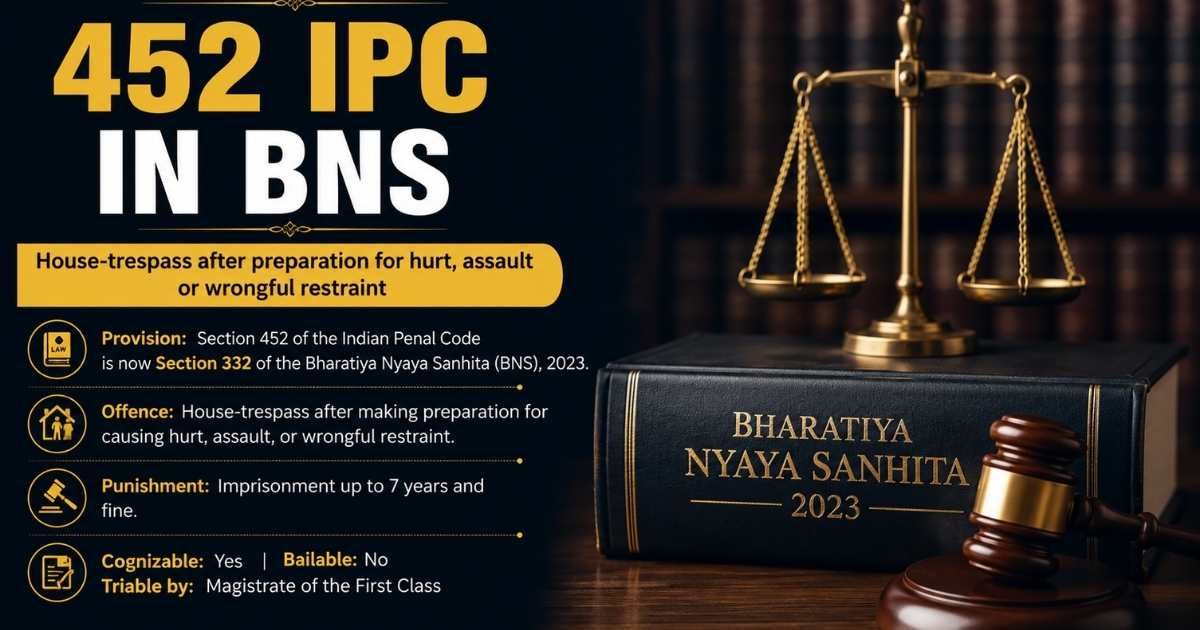

452 IPC in BNS is now called Section 333. This change matters a lot for lawyers and clients. The old law dealt with house-trespass done after preparing to cause hurt. The new law under 452 IPC in BNS works the same way, but the rules have changed. Courts now expect stronger digital proof. Videography of the crime scene is a must in most cases.
Many people still search using the old term. That’s why understanding 452 IPC in BNS helps you stay updated. It also helps you build a strong defense. The punishment stays serious, up to seven years in jail. Bail remains hard to get too. Knowing how 452 IPC in BNS works today gives you a real edge. It keeps your case strong from the very first day.
Legal Excellence
If you’re an advocate handling property disputes or family feuds in 2026, you’ve probably run into this question already: what happened to Section 452 IPC, and how do you argue it under the new code? The short answer is 452 IPC in BNS now lives as Section 333 of the Bharatiya Nyaya Sanhita. It covers house-trespass committed after the accused has already prepared to cause hurt, assault, or wrongful restraint. This isn’t just a renumbering exercise. The procedural rules around evidence, videography, and bail have shifted too, and that changes how you build a defense from day one.
Clients rarely walk in already knowing the new section number. They’ll say “he was booked under 452,” and it’s on you to explain that the charge now sits under Section 333 BNS, with a slightly different evidentiary bar attached. That conversation matters because it sets expectations early. A client who understands the videography requirement, for instance, will also understand why the absence of a scene recording can become the strongest card in their defense.
Section 333 BNS: Trespass with Preparation
Section 333 BNS zeroes in on intent and preparation, not just the act of walking into someone’s home uninvited. The law asks a simple question: did the accused bring something or plan something before they stepped inside? That “something” could be a weapon, a group of accomplices, or even a tool gathered specifically to cause harm. Without that preparatory step, you’re looking at a much weaker charge, or possibly no charge under this section at all.
This is where 452 IPC in BNS cases often get won or lost at the trial stage. Prosecutors love to stretch “preparation” to cover almost anything the accused was carrying, so you need to push back hard on vague claims. Ask for specifics: what object, when was it picked up, and who saw it? If the complainant can’t answer these clearly, the preparation element starts to fall apart, and the case may shrink down to a lesser offence.
House trespass under BNS also requires that the location actually qualifies as a dwelling. A courtyard, a locked shop, or an open plot doesn’t automatically count. You’ll want to nail down the exact nature of the premises early, because this single fact can decide whether Section 333 even applies.
Judges have grown more particular about this distinction since the code changed. A shared hallway in an apartment building, for example, sits in a gray zone that different benches have treated differently. Don’t assume the prosecution’s characterization of the premises is settled fact; verify it independently, and be ready to argue the point if the paperwork is vague.
Related POST: 294 IPC in BNS: Section 296 Mapping, Obscene Acts & Trial
The Essential Ingredients:
Three things need to line up for a conviction under this section. First, there’s house-trespass itself: unauthorized entry into a building, tent, or vessel used as a dwelling. Second, there’s preparation, meaning the accused did something physical beforehand, like gathering stones or carrying a weapon. Third, there’s intent to cause hurt, assault, or wrongful restraint, or at least to put the victim in fear of it. Miss any one of these three, and the prosecution’s case weakens considerably.
Key Changes from 452 IPC in BNS
Section 452 IPC replaced with Section 333 BNS might look like a simple swap on paper, but the practical differences matter a lot in court. The punishment stayed largely the same: imprisonment up to seven years, plus a fine. What changed is how that punishment gets proven and enforced.
The biggest shift is evidentiary. Under the old IPC regime, oral testimony often carried the case. Now, Section 105 BNSS requires a mandatory digital link, meaning the investigating officer has to videograph the crime scene, including the entry point and the accused’s position. That’s a huge opening for the defense. If there’s no video record of the actual entry, you’ve got solid ground to challenge the trespass claim outright.
Fine structures have also become more explicit under the new code, with clearer provisions for compensation rather than a general penalty. Bail status hasn’t moved, though; both the old and new versions treat this as a non-bailable offence. For advocates who cut their teeth arguing 452 IPC in BNS matters before the transition, the biggest adjustment isn’t the law itself but the paperwork trail it now demands. Here’s a quick side-by-side to keep handy:
| Aspect | IPC 452 (Old) | BNS 333 (New) | Remarks |
| Bail Status | Non-Bailable | Non-Bailable | Remains strict |
| Trial Court | Any Magistrate | Any Magistrate | Same jurisdiction |
| Evidence Standard | Oral Testimony | Mandatory Digital Link | Under Section 105 BNSS |
| Fine Type | General | Explicit for Compensation | BNS fine scales are higher |
Bail and Remand Procedure
Since this is a non-bailable offence under BNS, getting your client out on bail quickly should be priority one. The process has a fairly predictable rhythm now, and knowing each stage helps you move faster than opposing counsel.
Cognizable offence BNS cases like this one typically start with an FIR, followed by arrest, and then a series of procedural checkpoints where the defense can intervene. Each stage offers a chance to challenge weak evidence or push for release. Missing even one of these windows can cost your client extra weeks in custody, so timing really is everything here.
It also helps to brief the client on what to expect before each stage arrives. Someone facing a 452 IPC in BNS charge for the first time is often anxious and confused about why bail isn’t automatic. Walking them through the five checkpoints below, even briefly, tends to reduce panic and keeps them cooperative through what can be a stressful few weeks.
FIR & Scene Videography
Once the FIR is registered, the investigating officer must record the entry point and the accused’s position through scene videography under Section 105 BNSS. If this step gets skipped or done poorly, you’ve got an immediate procedural challenge to raise.
Arrest & Production
After arrest, the accused gets produced before the Magistrate. This is your moment to challenge a “non-videographed” arrest if the police failed to follow the mandatory recording requirement.
Anticipatory Bail (ABP)
If you sense an FIR is coming, don’t wait around. File for anticipatory bail under Section 482 BNSS right away to keep your client out of custody while the matter unfolds.
Bail under 481 BNSS
If arrest has already happened, regular bail under Section 481 BNSS is your next move. Arguing “lack of preparation” can help reframe the incident as a simple trespass or scuffle under BNS 329 instead of the more serious Section 333.
FSL & Digital Analysis
Any alleged “preparation” items, like weapons, go to forensic testing. CCTV footage, meanwhile, needs verification under Section 63 BSA before it can be relied on in court.
Challenging ‘Preparation’ and ‘Trespass’
A strong defense against Section 333 BNS charges usually starts by attacking the weakest link: intent. Was this really a trespass, or was it a visit that went sideways? If your client had a legitimate reason to be on the property, like collecting rent or discussing a family matter, the trespass element itself may not hold up.
Evidence required to prove Section 333 BNS is stricter than people assume. No weapon recovered at the scene means no clear proof of preparation, and a heated verbal argument inside a house simply isn’t enough to sustain this charge on its own. You should also check whether police videographed the recovery of any alleged tools; if they didn’t, that evidence may be inadmissible under Section 105 BNSS.
Digital alibis have become a genuinely useful defense tool too. Google Timeline data, call logs, and location records under BSA 61 can place your client somewhere else entirely at the time of the alleged trespass. Wrongful restraint under BNS claims, in particular, often crumble once solid digital evidence contradicts the complainant’s timeline.
Don’t overlook witness inconsistencies either. Family disputes often involve multiple people present in and around the house, and their accounts rarely match perfectly. Small contradictions about timing, entry point, or who said what can add up to reasonable doubt, especially when combined with a shaky preparation claim.
Critical Pitfalls for Practitioners
Even experienced advocates trip up on a few recurring mistakes in these cases. The most obvious one: citing “452 IPC” in your filings instead of Section 333 BNS. Courts in 2026 notice this, and it can read as sloppy preparation on the lawyer’s part rather than a harmless typo.
Another common error is glossing over the “house” definition. Criminal trespass law India requires that the entered premises actually function as a dwelling, place of worship, or similar structure. A vacant plot or an open field doesn’t meet that bar, so entry there won’t attract Section 333 no matter how threatening the intent was.
Don’t forget procedural details either. Since preparation is usually visible right at the scene, there’s rarely solid ground for a 15-day police custody request under Section 187 BNSS, so push back if the prosecution overreaches here. Also double-check that any CCTV evidence comes with the mandatory Section 63 BSA authentication certificate; without it, the footage shouldn’t be admitted at all.
Junior advocates handling their first 452 IPC in BNS matter sometimes forget to cross-reference the FIR timestamp against the videography timestamp. Even a small mismatch here can raise doubts about the scene recording’s authenticity, and that’s worth flagging early rather than discovering it mid-trial.
Trial and Evidence Strategy
Cross-examination is where these cases often turn. Ask direct, specific questions: was the door locked when the accused entered, and what exact object was in their hand? If the complainant names something generic that was never actually recovered at the scene, the preparation link starts to break down fast.
House trespass punishment under this section can reach seven years, which is steep for what sometimes amounts to a minor domestic dispute. If the trespass is admitted but the resulting hurt was minor, plea bargaining under Section 289 BNSS can be a smart way to avoid that full exposure for your client.
Property dispute criminal case dynamics also come into play when there are multiple accused. If co-accused who entered alongside your client have already secured bail, your client is entitled to parity under Section 481 BNSS. Trespass and assault charges filed together should be reviewed carefully too, since sometimes the assault element is weaker than the trespass claim, or vice versa, and that imbalance can shape your entire strategy.
Keep a running checklist for every 452 IPC in BNS trial you handle: videography compliance, weapon recovery documentation, witness statement consistency, and digital certificate authentication. A gap in any one of these areas is often enough to shift the outcome in your client’s favor, so treat the checklist as a habit rather than an afterthought.
Conclusion
Section 333 BNS has kept the core spirit of the old law intact while tightening up how evidence gets collected and verified. For practitioners, that means the fight now happens as much over videography compliance and digital records as it does over courtroom testimony. Understanding 452 IPC in BNS as it now stands under Section 333 isn’t optional anymore; it’s the baseline for representing clients competently in trespass matters.
At the end of the day, the law hasn’t softened, but the tools to defend a client fairly have gotten sharper. Use them well.
Whether you’re pushing for anticipatory bail, challenging a shaky preparation claim, or negotiating a plea bargain, the details matter more than ever. Stay sharp on the procedural requirements, know exactly what Section 105 BNSS demands, and you’ll be well-positioned to protect your client’s liberty at every stage.
