
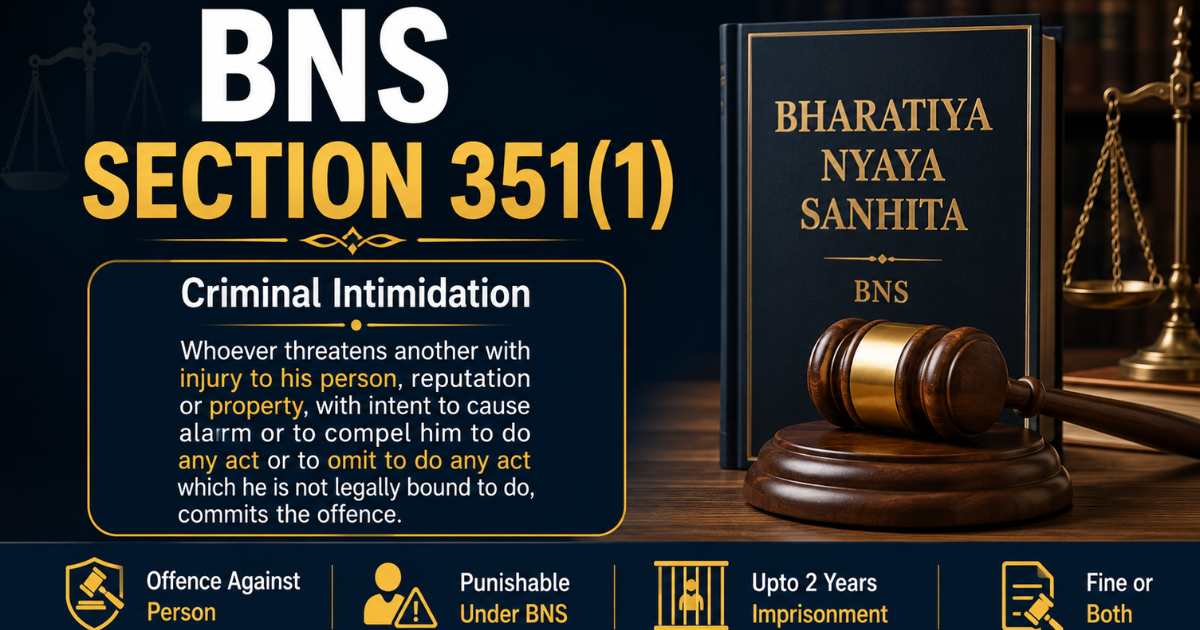

The Bharatiya Nyaya Sanhita (BNS), 2023 has replaced the Indian Penal Code (IPC) as India’s primary criminal law. Among its many provisions, BNS Section 351(1) of the BNS deals with criminal intimidation a law that touches everyday disputes far more often than people realize.
Whether it’s a threatening message during a property fight, a landlord pressuring a tenant with force instead of legal process, or a relative bullying an elderly parent into signing away assets, this section is often the difference between a lawful resolution and a criminal complaint.
This guide breaks down BNS 351(1) in plain language what it means, its legal ingredients, punishment, real-world examples, and what to do if you’re ever on the receiving end of a threat.
What is Section 351(1) of BNS?
In simple terms, criminal intimidation happens when a person threatens another with harm to their body, reputation, or property in order to scare them or force them to act (or not act) in a certain way.
The threat doesn’t need to be carried out. The law focuses on the intent to create fear and use that fear as leverage. It also extends to threats made against someone the victim cares about, not just the victim directly.
In short: if someone uses fear as a tool to control your decisions or silence you, it may qualify as criminal intimidation under this provision.
Related post: Section 126(2) BNS: wrongful restraint ingredients and defence
Essential Ingredients of BNS 351(1)
Courts typically look for four core elements before an act qualifies as criminal intimidation.
1️⃣ Threat
There must be an identifiable threat. It can be:
- Spoken directly
- Delivered in writing (letters, notices, messages)
- Sent digitally (WhatsApp, email, social media)
- Communicated through gestures or symbolic conduct
2️⃣ Nature of Threat
The threat must relate to one of the following:
- Physical harm or violence
- Damage to property
- Harm to reputation or social standing
- Injury to someone the victim is emotionally or personally connected to
3️⃣ Intention
The person making the threat must intend to:
- Cause alarm or fear, or
- Force the victim to do something they’re not legally required to do, or
- Stop the victim from exercising a legal right
Intention is central. Courts have repeatedly held that a heated, impulsive remark made in the middle of an argument doesn’t automatically amount to criminal intimidation there has to be a genuine intent behind the words.
4️⃣ Impact
The victim doesn’t need to suffer actual harm for the offence to apply. Mere fear or alarm caused by the threat is enough to attract liability under this section.
Punishment Under BNS 351
Punishment varies depending on how serious the threat is.
🔹 Basic Criminal Intimidation
For an ordinary threat, the punishment is:
- Imprisonment of up to 2 years, or
- Fine, or
- Both
🔹 Aggravated Threat
If the threat involves any of the following, punishment becomes stricter:
- Threat to cause death
- Threat of grievous hurt
- Threat to destroy property by fire
- Threat to commit an offence punishable with death or life imprisonment
In such cases, punishment can extend up to 7 years imprisonment, along with a fine.
| Type of Threat | Punishment |
| Basic intimidation | Up to 2 years imprisonment, or fine, or both |
| Aggravated intimidation (death, grievous hurt, arson, serious offences) | Up to 7 years imprisonment with fine |
| Anonymous intimidation | Additional imprisonment up to 2 years, over and above the punishment under 351(1) |
Practical Examples (Real-Life Scenarios)
Understanding the law is easier with real situations. Here’s how BNS 351(1) plays out in day-to-day disputes.
✅ Property Dispute
A co-owner tells another: “Sign the release deed, or I’ll destroy your reputation in front of everyone.” This is a textbook example of using reputational harm as leverage squarely covered under BNS 351(1).
✅ Business Conflict
A vendor or contractor threatens physical harm to a client unless an overdue payment is cleared immediately. Even if no violence actually occurs, the threat itself is punishable.
✅ Senior Citizen Harassment
Adult children or relatives pressuring elderly parents through threats or intimidation to transfer property or assets can be prosecuted under this section. This is an increasingly common issue in inheritance disputes.
✅ Tenant-Landlord Issue
A landlord who threatens force, violence, or illegal eviction instead of following due legal process can be held liable for criminal intimidation, regardless of whether the tenant is actually at fault.
Is Criminal Intimidation a Cognizable Offence?
It depends on the severity of the threat:
- Basic criminal intimidation is generally treated as non-cognizable, meaning police typically need court permission before registering an FIR or starting an investigation.
- Aggravated threats (death, grievous hurt, arson) tend to be treated more seriously, and police action can follow more directly depending on the facts of the case.
Because classification affects how quickly police can act, it’s important to document the threat clearly and consult a lawyer early.
How to Prove Criminal Intimidation?
Since intent and fear are central to this offence, evidence plays a critical role in building a strong case. Useful evidence includes:
- WhatsApp or text message threats
- Call recordings
- Emails or written communication
- CCTV footage
- Witness statements
- Social media posts or comments
The stronger and more contemporaneous the evidence, the easier it becomes to establish both the threat and the intent behind it.
Difference Between IPC 503 and BNS 351
| Aspect | IPC Section 503 (Old Law) | BNS Section 351 (New Law) |
| Legal Framework | Indian Penal Code, 1860 | Bharatiya Nyaya Sanhita, 2023 |
| Core Concept | Defined criminal intimidation | Retains the same core concept |
| Language | Older, colonial-era drafting | Modernized, restructured language |
| Anonymous Threats | Covered under related provisions | Explicitly addressed with added punishment |
| Applicability | Applied under IPC-based FIRs and trials | Now governs all fresh cases under BNS |
While the underlying principle hasn’t changed dramatically, BNS 351 offers clearer structure and explicitly accounts for modern forms of communication, including digital and anonymous threats.
Why This Section is Important in Property & Civil Disputes
Many people assume intimidation only means physical violence but the law covers far more:
- Forcing someone to sign documents under fear
- Threatening to file false police complaints or cases
- Blackmail through reputational damage
- Pressuring legal heirs into unfair settlements
This makes BNS 351(1) especially relevant for:
- Property owners
- Women facing coercion or harassment
- Senior citizens targeted by relatives
- Business partners and investors in financial disputes
What Should You Do If You Face Criminal Intimidation?
If you’re being threatened, how you respond matters. Consider the following steps:
- Do not retaliate avoid escalating the situation further.
- Preserve all evidence screenshots, recordings, messages.
- Document incidents note dates, times, and witnesses.
- Send a legal notice, if advised by your lawyer.
- File a police complaint under Section 351 where appropriate.
- Consult a lawyer immediately to understand your options.
Acting early often prevents a situation from escalating into something more serious.
Preventive Legal Advisory for Property & Business Owners
Prevention is always better than dealing with a legal dispute after the fact. Property and business owners should:
- Use properly drafted, legally reviewed agreements
- Ensure all property documents are registered
- Avoid relying on informal or verbal settlements
- Keep records of all important communications
- Seek legal advice before issuing any warnings or strong statements to another party
These simple precautions can prevent disputes from turning into criminal matters altogether.
Conclusion
Criminal intimidation under BNS Section 351(1) exists to protect people from being controlled or coerced through fear. Whether it shows up in a family property dispute, a business disagreement, or harassment faced by senior citizens, the law recognizes that a threat doesn’t need to be carried out to cause real harm the fear itself is enough to attract legal consequences.
As more communication moves to phones, WhatsApp, email, and social media, intimidation increasingly happens outside face-to-face confrontation, making awareness of this law more important than ever. If you’re facing threats of any kind, don’t wait until the situation worsens preserve your evidence, understand your rights, and consult a qualified lawyer to guide you through the right course of action under BNS 351.
