
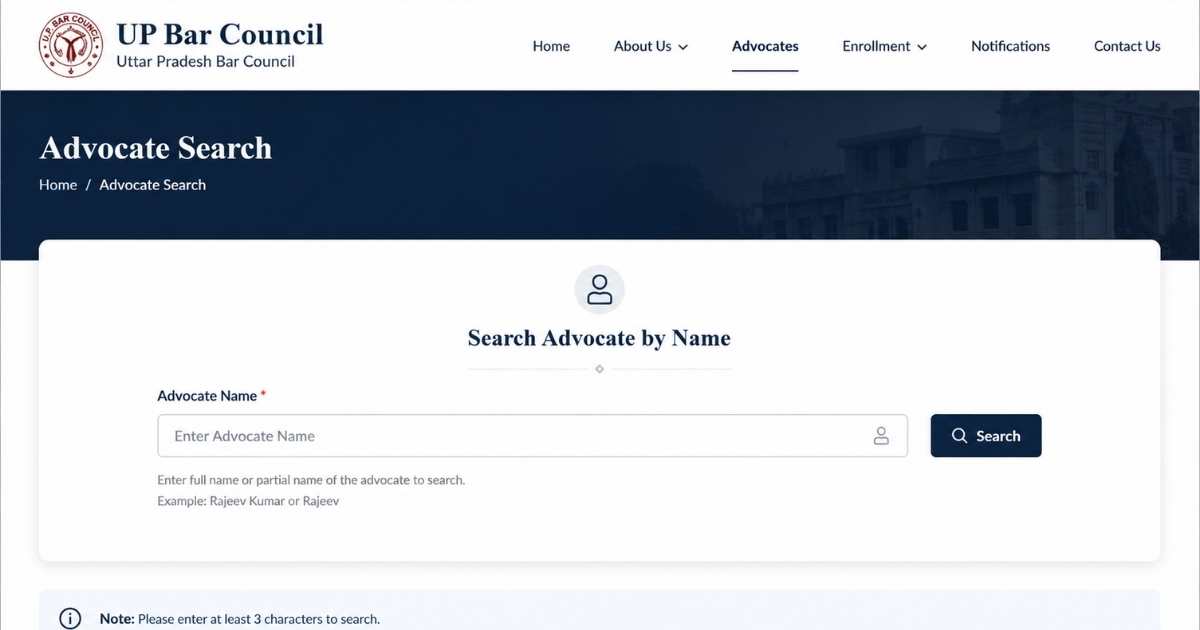

Verifying a lawyer’s credentials before you sign a vakalatnama, hand over a retainer, or trust someone with a property dispute is not optional it’s due diligence. The Bar Council of Uttar Pradesh (BCUP), headquartered in Prayagraj, maintains the official State Roll for over 4 lakh enrolled advocates spread across 75 districts. This guide walks you through exactly how to run a UP Bar Council advocate search by name, why UP’s massive advocate density makes the process tricky, and how to avoid the most common verification mistakes.
Whether you’re a litigant checking counsel before a hearing at the Allahabad High Court, a corporate team vetting outside counsel in Lucknow, or a new advocate confirming your own enrollment status, this walkthrough covers the process end to end.
Legal Excellence
| Metric | Detail |
| Enrolled Advocates | 4,00,000+ |
| Districts Covered | 75 |
| Administrative Hub | Prayagraj (Allahabad) |
| Enrollment Format | UP/[Number]/[Year] |
| Governing Law | Advocates Act, 1961 |
Legal Framework: The UP State Roll
The State Roll isn’t just an internal directory it’s a statutory record. Under the Advocates Act, 1961, every State Bar Council, including BCUP, is legally required to maintain and periodically update an authentic list of everyone entitled to practice law within its jurisdiction. This roll determines who can appear before UP courts, sign legal documents on a client’s behalf, and represent parties in the Allahabad High Court and its Lucknow Bench.
For litigants, this means the name-search tool isn’t a convenience feature it’s the closest thing to a legal source of truth about whether the person representing you is actually authorized to do so.
Related post: Section 173 CrPC Equivalent in BNSS: The Definitive Charge Sheet Guide
The BCUP Disciplinary Oversight
Name search also functions as a public-facing enforcement layer. When the BCUP Disciplinary Committee suspends or debars an advocate, that status change is reflected directly in the roll. A “Cancelled” or “Suspended” tag against a name means that individual cannot legally file, argue, or sign in any UP court from the High Court down to tehsil-level proceedings.
There’s also an inter-state dimension. If an advocate enrolled with BCUP appears in another state’s courts without formally transferring their roll, the UP search record becomes key evidence in any misconduct complaint filed with the Bar Council of India. In short, the search tool protects both clients and the profession’s integrity.
Common Names: Singh, Yadav, Tiwari, Sharma
Uttar Pradesh has the highest concentration of advocates in the country, and with that comes an equally high concentration of shared surnames. A search for a common name can easily return hundreds of matching entries, which makes precision searching essential.
Here’s what makes name-matching harder in UP than in smaller state rolls:
- Surname clustering Surnames like Singh, Yadav, Tiwari, and Sharma appear tens of thousands of times across the roll, so a first-and-last-name search alone is rarely enough to isolate one person.
- Regional filtering Every advocate is typically affiliated with a specific District Bar Association. Narrowing your search to the correct district (say, Ghaziabad instead of Lucknow) eliminates most false matches instantly.
- Historical spelling drift Older enrollment records, some dating back decades, sometimes carry transcription variations (Dwivedi vs. Dubey, for example). If your first search comes up empty, try alternate spellings before assuming the record doesn’t exist.
Combining name, father’s name, and district is the fastest way to cut through duplicate results.
Tutorial: Step-by-Step Name Search
Follow this sequence to run a clean, accurate search on the BCUP portal.
Visit the BCUP Official Website
Go to the official Bar Council of Uttar Pradesh website and locate the “Search Advocate” or “Advocate Inquiry” section, usually listed under member services or verification.
Select ‘Search by Name’
Choose the name-based search option rather than enrollment number search. Enter only the advocate’s first and last name drop titles like “Advocate,” “Mr.,” or “Adv.” since these can interfere with the search algorithm.
Input Father’s Name (Essential)
This is the single most important filter for accuracy. Because so many advocates share the same first and last name, the father’s name field is what narrows results down to a specific individual.
Review the ‘Enrollment Date’
Cross-check the enrollment date against what the advocate has told you about their years of practice. A mismatch such as someone claiming decades of seniority with a 2022 enrollment date is a red flag worth investigating further.
Check ‘District’ and ‘Bar Association’
Confirm the district and registered bar association shown in the results. If an advocate says they practice in Mirzapur but the roll lists Gorakhpur, ask whether they’ve formally shifted their registered bar or are simply appearing there on a case-by-case basis.
Tip: A “Wait for Approval” status usually means the advocate enrolled recently and their record is still pending final authentication not necessarily a problem, but worth following up on before relying on their credentials.
Impact of the COP 2026 Renewal List
BCUP has been running an intensive roll-verification drive through 2025–2026, and it has changed what a name search shows you.
- COP status is now visible. Advocates enrolled after 2010 must clear the All India Bar Examination (AIBE) and hold a valid Certificate of Practice (COP). Search results now display this status directly, so you can instantly see whether a lawyer is currently authorized to file in the Allahabad High Court.
- Inactive and deceased entries are being purged. BCUP has removed thousands of dormant records from the public search interface, primarily to prevent proxy filing and identity misuse.
- Active status affects more than practice rights. Advocates need to appear on the current active list to retain voting eligibility in BCUP elections, which makes routine self-verification worthwhile even for practicing lawyers.
If you’re checking a lawyer’s status in 2026, a missing or expired COP tag is one of the clearest warning signs you can find.
Comparative Jurisprudence: Local Bar vs State Roll
UP’s district-linked, statutory approach to advocate verification looks quite different from how other major legal systems handle it.
| Jurisdiction | Search Model | Legal Weight |
| Uttar Pradesh (BCUP) | District-linked State Roll | Statutory the roll is the binding legal record |
| United States | State bar directories (e.g., State Bar of Texas) | Statutory at state level; ABA search is voluntary |
| European Union | Multilingual “Find a Lawyer” directory | Aggregated from national bar registries |
| Australia | Unified High Court roll | Single national roll; no separate district registration |
The key difference is enforceability. In the US and Australia, a national or state-wide roll is often enough to establish standing. In UP, the requirement to register a “seat of practice” within a specific district adds an extra layer of territorial accountability an advocate is tied not just to a state, but to a bar association within it.
Practical Tips for Litigants & New Lawyers
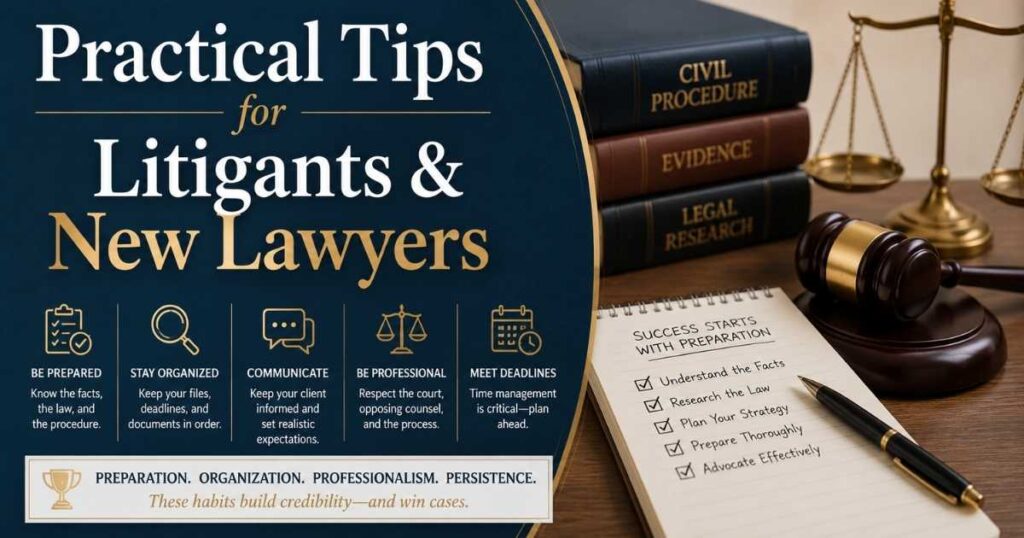
Keeping your own profile accurate or checking someone else’s carefully comes down to a few consistent habits:
- Check your voter list status. BCUP elections are closely watched, and “Not a Voter” status usually means your registered address needs updating.
- Verify the Welfare Fund stamp. Every valid vakalatnama in UP must carry the BCUP Welfare Fund stamp; documents with fake stamps can lead to enrollment being flagged.
- Resolve name mismatches early. If your legal name doesn’t match your academic records, file a correction request with the Enrollment Correction Cell in Prayagraj rather than letting the discrepancy linger.
- Confirm AOR status for High Court matters. If you need an Advocate-on-Record for the Allahabad High Court, make sure the search result explicitly lists their High Court enrollment number.
Become the Top-Ranked Advocate in Your UP District Free
If you’re an advocate looking to be discovered by clients searching for “best lawyer in Lucknow” or “civil advocate in Prayagraj,” getting your verified BCUP profile listed on legal directories can meaningfully improve your visibility often at no cost to get started.
FAQs
Is the UP Bar Council name search free to use?
Yes, searching the BCUP roll by name is free and open to the public on the official portal.
Why does my search return too many results?
Common surnames produce large result sets add the father’s name and district to narrow it down.
What does a “Cancelled” status mean?
It means the advocate has been debarred or suspended and cannot legally practice in UP courts.
Can I search by enrollment number instead of name?
Yes, the portal also supports search by enrollment number in the UP/[Number]/[Year] format.
How often is the roll updated?
BCUP updates enrollment and COP status regularly, especially during active verification drives.
More Guides in This Category
- UP Bar Council Advocate Search by COP Number
- Bar Council Registration Check by Name (Multi-State Guide)
- How to Verify an Advocate-on-Record for the Allahabad High Court
- Understanding COP Renewal Rules Under the Advocates Act
Conclusion
Verifying an advocate credentials in Uttar Pradesh isn’t just a formality it’s a practical safeguard for anyone relying on legal representation in one of India’s largest and most active bar jurisdictions. Because BCUP’s roll is statutory, what you find (or don’t find) during a name search carries real legal weight, whether you’re confirming a lawyer’s right to practice, checking their COP status, or spotting a mismatch that deserves a second look. With over 4 lakh advocates and heavy surname overlap across districts, taking the extra step to filter by father’s name, district, and enrollment date is what separates a reliable verification from a false match.
As BCUP continues digitizing its records through the 2026 renewal drive, the search process is only getting more transparent but it still rewards a careful, methodical approach. Whether you’re a litigant protecting your interests or a new advocate keeping your own profile in order, treating the State Roll as your first stop for verification is simply good practice in a legal community this large.
